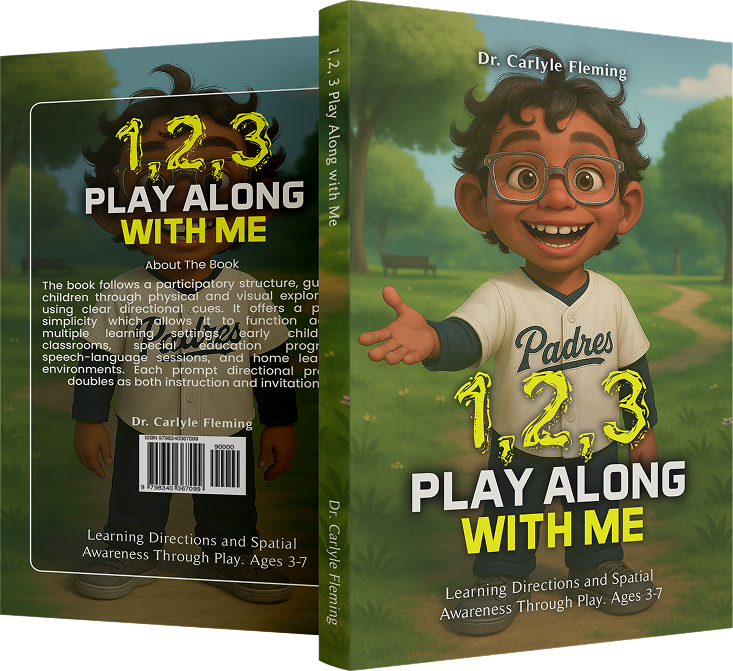
Written with a gentle, poetic simplicity, the book is intentionally flexible, allowing it to be used across a wide range of learning environments. It fits naturally into early childhood classrooms, special education settings, speech and language therapy sessions, and home learning routines. Educators, therapists, and caregivers can easily adapt the pacing and interaction level to meet individual learning needs, making the book accessible to children with different abilities and developmental stages.
Each directional prompt in the book serves a dual purpose. On one level, it provides clear instruction that helps children understand spatial concepts and follow directions. On another level, it acts as an open invitation, encouraging curiosity, conversation, and personal discovery. Children are not told exactly what they must see; instead, they are encouraged to notice, describe, and share what they find, building confidence in their observations and language skills.
Through this interactive structure, the book supports the development of spatial awareness, visual tracking, vocabulary, motor coordination, and problem-solving skills. More importantly, it nurtures a sense of joy and confidence in learning by showing children that exploration itself is valuable. By turning simple movements and everyday surroundings into meaningful learning moments, the book creates a playful, inclusive, and engaging experience that grows with the child across multiple settings.